Governor’s Address And The Federal Fault Line: Himachal’s Constitutional Crossroads Strap: A New Entrant To The Governor–Government Confrontation Club
· Free Press Journal
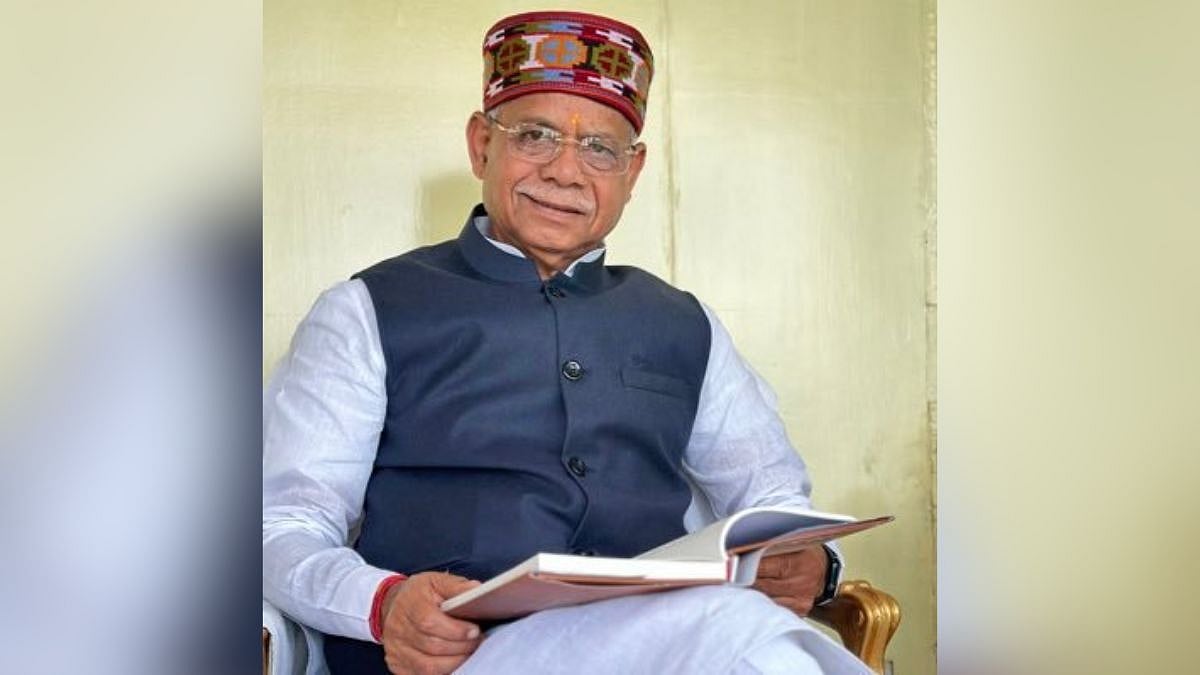
Prior to relinquishing charge which preceded his appointment as Telangana governor, Shiv Pratap Shukla had recently joined the increasingly visible league of Governors in non-BJP ruled states—such as Kerala, Tamil Nadu, Karnataka and West Bengal—where Raj Bhavans have found themselves in direct confrontation with elected Chief Ministers who allege tacit or tactical support from the Centre. The charge is not merely political; it is constitutional. Critics argue that such confrontations, if prolonged, risk weakening the roots of parliamentary democracy by unsettling the delicate balance between an unelected constitutional head and an elected executive. The latest episode in Himachal Pradesh now places the hill state squarely within this national pattern of friction.
Visit milkshakeslot.lat for more information.
The Budget Session Flashpoint;
On the opening day of the Budget Session on February 16, Ex-Governor, Shiv Pratap Shukla declined to read portions of the customary address to the House, triggering a sharp constitutional debate. Under Article 176 of the Constitution, the Governor is mandated to address the legislature at the commencement of the first session each year. Conventionally, the speech is drafted by the Council of Ministers and reflects the policy priorities of the elected government. By omitting parts of the prepared text—reportedly those critical of the Union Government’s decision to discontinue the Revenue Deficit Grant (RDG)—the Governor stepped into contested terrain. The question is not whether a Governor can disagree with the contents; the question is whether such disagreement permits alteration or omission in a speech constitutionally attributed to the elected executive.
The Challenge Before the Sukhu Government;
The challenge before the Sukhu government is strategic rather than rhetorical. Confrontation may consolidate political support in the short term, particularly by invoking federal rights. But governance demands continuity. The Chief Minister must navigate fiscal stabilisation without RDG, legislative productivity despite possible assent delays, and political messaging that avoids appearing combative for its own sake. The government’s response must be legally calibrated—perhaps by invoking judicial clarification where necessary—rather than politically escalatory. States like Tamil Nadu and Kerala have approached the Supreme Court over gubernatorial inaction on bills; Himachal may eventually confront similar choices.
Managing a Governor with Central Backing;
How should a state government deal with a Governor perceived to have central backing? The constitutional answer lies in restraint and procedure. Article 163 circumscribes gubernatorial discretion except in limited areas. Political prudence demands sustained communication, not public acrimony. The Sukhu government would do well to institutionalise structured consultations with Raj Bhavan, ensuring that contentious drafts are pre-discussed before public presentation. Simultaneously, it must document procedural compliance meticulously, so that any judicial review rests on a clear constitutional record.
Symbolism and Fiscal Federalism;
The immediate fallout is political, but its implications are structural. The Budget Session is not merely ceremonial; it frames the fiscal and governance narrative of the state. When the Governor abbreviates or modifies that narrative, the symbolism is powerful. It signals institutional discord at the highest constitutional level. In a small state like Himachal, where fiscal dependency on central transfers remains significant, the RDG controversy—estimated at nearly ₹10,000 crore annually—has become more than a financial issue. Chief Minister, Sukhvinder Singh Sukhu has described the grant as a right rooted in historical commitments, not an act of charity. The Governor’s omission of criticism directed at the Centre has therefore been read by the ruling Congress as alignment with the Union Government rather than neutrality.
A unified Pattern;
The broader national context intensifies this perception. In Tamil Nadu, Governor, R. N. Ravi walked out without fully reading the Assembly address in January 2026, citing misleading statements. In Karnataka, Governor Thaawarchand Gehlot objected to paragraphs critical of the Centre. In Kerala, Governor Rajendra Vishwanath Arlekar reportedly omitted portions over disagreements with the Cabinet. These episodes collectively shape a pattern: Governors in Opposition-ruled states increasingly invoking discretion over addresses or legislation, while state governments insist such actions violate the spirit of responsible government.
Earlier Flashpoints in Himachal;
For Himachal, however, the confrontation is not new. The Vice-Chancellor appointment dispute in 2025 over Dr. Y.S. Parmar University of Horticulture and Forestry and Chaudhary Sarwan Kumar Himachal Pradesh Krishi Vishvavidyalaya exposed deeper tensions. When Raj Bhavan issued advertisements for VC posts and the state government withdrew those pending legislative amendments, the standoff escalated to judicial intervention. The Assembly passed amendment bills seeking to ensure appointments on the “aid and advice” of the government. The ex-Governor’s insistence on his authority as Chancellor, invoking Supreme Court guidelines, reflected a divergence over whether such powers are statutory or quasi-constitutional. The High Court’s stay only temporarily cooled what had become a symbolic battle over institutional primacy.
Summer Travel: Must-Visit These Hill Stations In India For Scenic EscapeFallout for Centre–State Relations;
The RDG episode adds fiscal federalism to the list of friction points. The Union’s discontinuation of the grant has already sharpened political debate. A prolonged confrontation risks politicising routine administrative coordination. If Raj Bhavan and the Secretariat function at cross purposes, even routine files—appointments, bills, financial approvals—can become arenas of delay. For a hill state grappling with climate vulnerabilities and fiscal stress, institutional paralysis is not a theoretical risk; it has tangible consequences for governance and development.
Restoring Institutional Equilibrium;
Ultimately, the debate is less about personalities and more about the evolving character of Indian federalism. The Governor’s office was conceived as a constitutional sentinel, not an alternative political executive. Yet in a highly polarised polity, the lines blur. Himachal’s latest episode is therefore not an isolated controversy; it is a microcosm of a national argument over whether constitutional offices can remain insulated from partisan crosscurrents. The imperative for Himachal Pradesh is clear: restore institutional equilibrium before political discord ossifies into constitutional distrust.
(Writer is senior political analyst based in Shimla)