A Dramatic 24 Hours for Oil Prices
· The Atlantic
This is an edition of The Atlantic Daily, a newsletter that guides you through the biggest stories of the day, helps you discover new ideas, and recommends the best in culture. Sign up for it here.
For more than a week after the United States and Israel’s initial attack on Iran, oil prices stayed relatively calm—even as bombs rained down in the Middle East and the war expanded to neighboring countries. When Iran announced that it would attack any ship passing through the Strait of Hormuz, that all-important passage for the global oil trade, energy markets ticked up only slightly. But by the time trading resumed on Sunday evening, panic had started to set in.
Visit milkshakeslot.com for more information.
Earlier today, the extent of the alarm became clear. The price of a single barrel, which had climbed roughly 20 percent over the course of last week, jumped from about $92 on Friday afternoon to $119.50 on Sunday—a nearly 30 percent gain. It has since tumbled back down to about $90 at the time of publication, likely owing to President Trump’s comment to CBS earlier today that the war is “very complete,” as well as the G7’s meeting to discuss strategies for mitigating the recent shocks. But the president has already changed course, telling reporters just hours ago that “we haven’t won enough. We go forward, more determined than ever to achieve ultimate victory.”
As financial markets have grown accustomed to Trump’s erratic decision making, they have, as I’ve written, begun to process his moves more slowly than they used to. Traders have navigated the administration’s sudden interventions abroad—such as the strikes targeting Iran’s nuclear program last summer and the clandestine capture of ex–Venezuelan President Nicolás Maduro in January—with relative steadiness, assuming that the instability in those countries would be short-lived. But “this isn’t Venezuela,” Josh Lipsky, the chair of international economics at the Atlantic Council, told me. Traders may have held steady last week because they “wanted to see if there would be a quick resolution—and the message over the weekend is don’t bet on it.”
On Friday, Trump demanded Iran’s unconditional surrender; on Saturday, Israel reportedly struck oil facilities in Tehran and the province of Alborz; and yesterday, the country’s government signaled its defiance by choosing a son of Ali Khamenei, the supreme leader who was killed in the initial attacks, to succeed him. Iran’s foreign minister has rejected calls for a cease-fire. More than 1,200 Iranians and seven American service members have already been killed, and the death toll continues to rise in the surrounding region.
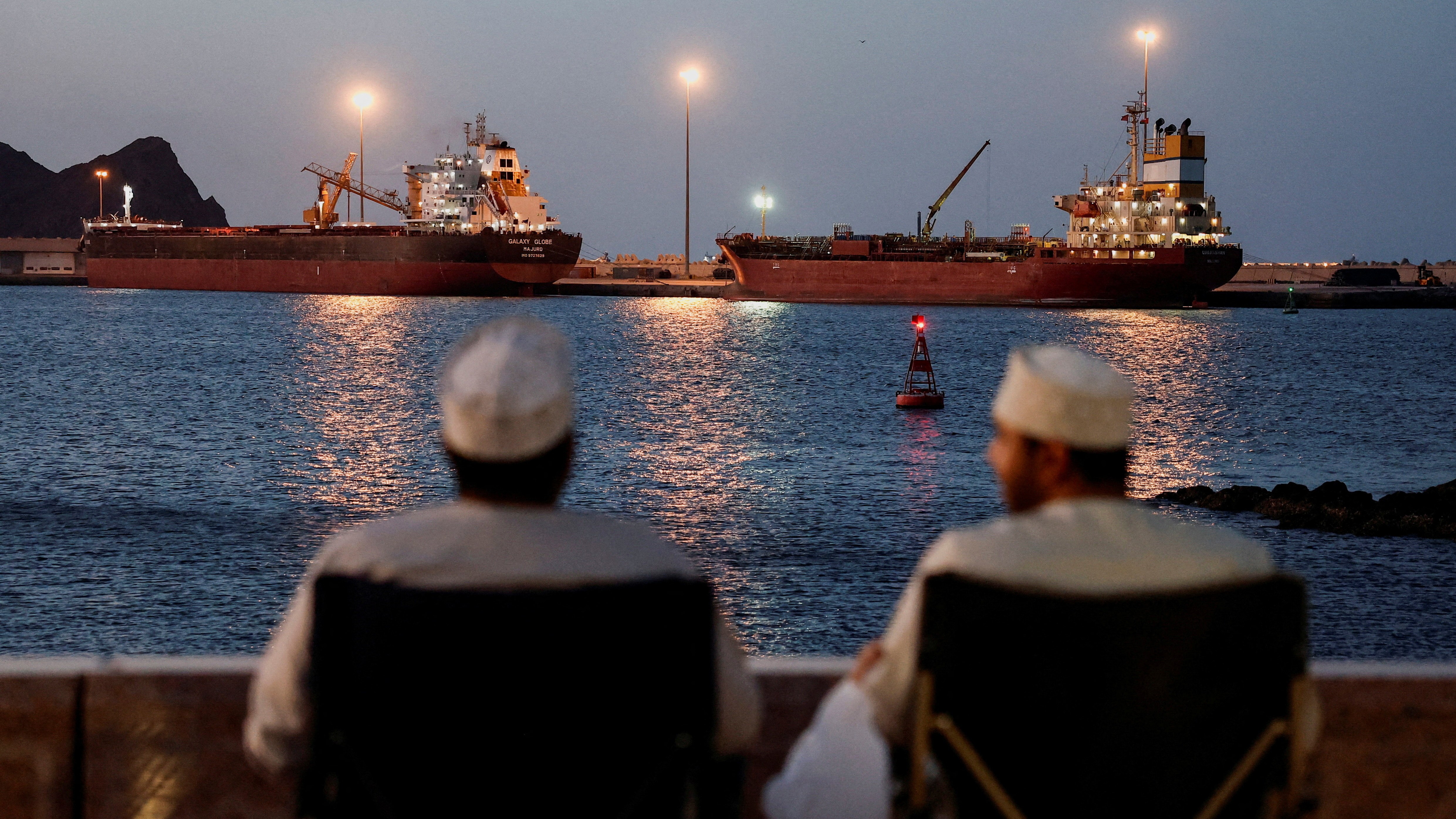
The biggest lever on oil prices right now remains the Strait of Hormuz. Traders might respond in the short term to positive signals from the Trump administration, but “as long as shipping is stopped the pain point remains,” Lipsky explained this evening. The number of ships passing through the waterway is now in the single digits, significantly down from the historical average of 138 ships a day. Millions of barrels that would ordinarily be supplying the world’s energy are just sitting around. At the same time, U.S. and Israeli strikes on Iran’s energy infrastructure are creating even more uncertainties for the Middle East’s oil supply, and Americans are already beginning to see the consequences at the pump. The average price of gasoline in the U.S. reached $3.48 a gallon today—up nearly 17 percent since the start of the conflict.
These conditions echo the onset of the energy crises of the 1970s, which were triggered in large part by the Yom Kippur War and the Iranian Revolution of 1979. Back then, gas was in such short supply that it had to be rationed; photos of long lines at the pump became a potent symbol of economic anxiety. That crisis lasted years, and the recent war with Iran has been going on for only 10 days—there’s no indication yet that gas will become quite that scarce. The U.S. produces oil at home, but as my colleague Rogé Karma wrote on Friday, many U.S. refineries aren’t set up to process the type of oil that’s extracted domestically, meaning that America’s oil supply is far from guaranteed if the war drags on.
At first, despite his apparent obsession with the idea of seizing other countries’ oil reserves, Trump didn’t mention America’s plan for Iranian oil. After prices spiked on Sunday, he acknowledged the chaos even as he tried to wave it away. “Short term oil prices, which will drop rapidly when the destruction of the Iran nuclear threat is over, is a very small price to pay for U.S.A., and World, Safety and Peace,” Trump wrote on Truth Social. In private, the White House is scrambling to find solutions, as Chief of Staff Susie Wiles is reportedly pressing advisers to figure out how to keep gas prices down.
Serious energy shocks have the potential to inflate costs across the board. Travel could become more expensive as jet fuel gets pricier; groceries could become less affordable as the fuel used to farm and transport them starts to cost more; and Americans’ utility bills could shoot up as the gas that heats and powers their homes gets scarcer.
To guard against that, Trump announced on Tuesday that the U.S. Navy would begin escorting tankers through the strait if necessary. Treasury Secretary Scott Bessent has suggested that the administration might “unsanction” some of the Russian oil that has been off-limits since the country invaded Ukraine in 2022, increasing the global supply at the cost of rolling back an important check on a rival superpower. The White House has also floated an ambiguous plan to intervene in oil-futures markets to keep prices down, although nothing has been officially announced.
Trump has long promised to reduce foreign intervention and “Drill, baby, drill” to lower energy costs. Now the self-proclaimed “peace president” has pulled the U.S. into a conflict that risks worsening the cost-of-living crisis that he has promised to solve. The administration’s rationale for this war has been varied and vague; public support is low. The supposed benefits of U.S.-led intervention in the Middle East aren’t intuitive to many Americans. The reality of higher costs is far easier to understand.
Here are three new stories from The Atlantic:
- Jeffrey Goldberg on the Pete Hegseth exception
- A dating-app nightmare
- Adam Serwer on the gullible, cynical America
Today’s News
- Iran’s Assembly of Experts named Mojtaba Khamenei, a son of Iran’s late Supreme Leader Ayatollah Ali Khamenei, as the country’s new ruler as the war with the U.S. and Israel continues to escalate across the region.
- Anthropic sued the Trump administration after the Pentagon labeled the AI company a supply-chain risk and ordered federal agencies and contractors to cease business with the company. Anthropic says the move was unlawful retaliation over disagreements about how its AI should be used by the military.
- Federal prosecutors charged two men today with supporting ISIS after they attempted to detonate homemade bombs during a clash with far-right protesters outside Gracie Mansion on Saturday. Authorities said that at least one of the devices contained TATP, a powerful explosive, but neither device detonated and no one was injured.
Dispatches
- Notes From the Editor in Chief: Nearly a year after the national-security scandal that came to be known as Signalgate, no one in the Trump administration has faced consequences, Jeffrey Goldberg writes.
- The Wonder Reader: Isabel Fattal explores stories about an uncomfortable emotion that’s worth feeling.
Explore all of our newsletters here.
Evening Read
Illustration by Paul Spella / The AtlanticA Mysterious Code Is Being Broadcast on Shortwave Radio. Is It Iran?
By Shane Harris
On February 28, the day that bombs started falling on the Islamic Republic, a man’s voice began broadcasting in Farsi on a shortwave-radio frequency. He announced himself—“Tavajjoh! Tavajjoh!” (Attention! Attention!)—and then read a string of seemingly random numbers. Anyone with a shortwave radio could hear him. But the announcer’s intended audience was likely no more than a handful of people using a centuries-old system to decipher his otherwise incoherent message.
The eerie and still-unattributed radio transmission came from a numbers station. You don’t hear them much anymore. But when the CIA and the KGB needed to communicate with their spies working undercover, such broadcasts were convenient and safe ways to send orders around the world. The intended recipient turns on their radio at a set time to a specific station and writes down the numbers they hear. Using a technique called a “one-time pad,” they convert each number into a letter, eventually revealing a message. The transmission is out in the open. But if only the sender and the recipient have the pad—which is written down and destroyed immediately after the message is sent—only they can understand the message.
More From The Atlantic
- The fight over Tylenol and autism just got messier.
- David Wolpe: I believe California has a right to exist.
- The Pentagon cut its civilian safeguards before the Iran war.
- The left shouldn’t demonize homeowners.
- The SNL sketch that broke all the rules
- An air-campaign primer
Culture Break
Illustration by The Atlantic. Source: David Turner / Penske Media / Getty.Watch (or skip). Who gets to claim the Kennedys? Love Story (streaming on Hulu) deeply empathizes with John F. Kennedy Jr. and Carolyn Bessette—but this doesn’t make the show any less exploitative, Megan Garber writes.
Explore. Andrew Tate doesn’t get the point of books, Joel Halldorf argues.
Rafaela Jinich contributed to this newsletter.
When you buy a book using a link in this newsletter, we receive a commission. Thank you for supporting The Atlantic.