Striking Deepal S07 an interesting if not perfect premium EV arrival
· Citizen
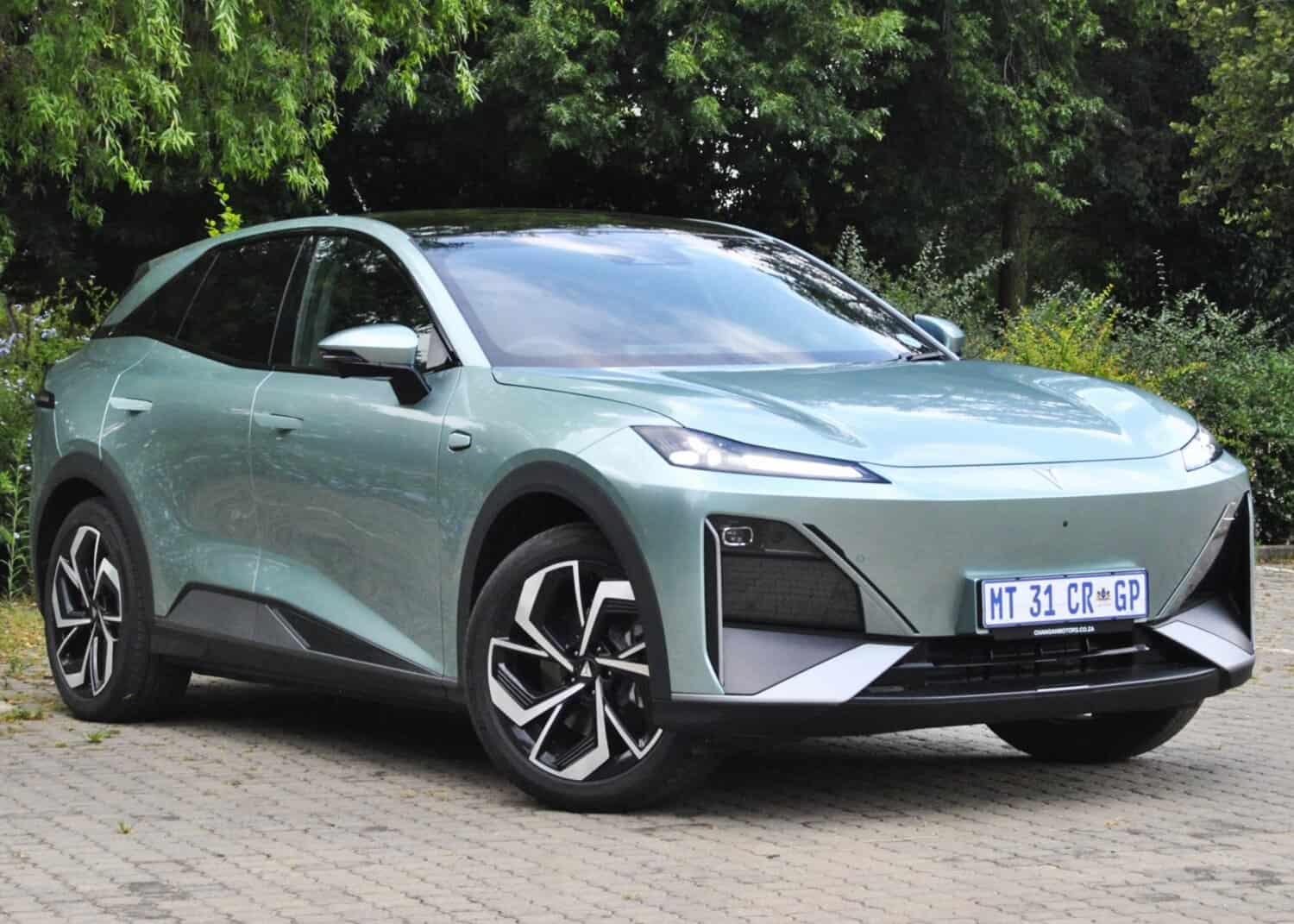
Electric cars are no longer the foreign entity they once were as evident by the number of offerings already available.
Visit asg-reflektory.pl for more information.
Compared to its parent company Changan, Deepal is very much a foreign brand as it only debuted last year.
New name
The upscale division of Changan Deepal is still relatively new as it only produced its first vehicle in 2022.
Founded four years before as a technology company, its products are all new energy, with a focus on fully electric and range extending electric vehicles (REEV).
ALSO READ: EV onslaught continues as Changan prices futuristic Deepal S07
Its name roughly translated as Deep Blue, the brand will expand its product range later this year with two more SUVs, one an EV and the other a REEV.
As with Changan, distribution is handled by a Saudi Arabian firm, Jameel Motors, and until the arrival of the mentioned products, its line-up comprises a single model, the S07.
Segment not overcrowded
Available in China since 2023, the S07 occupies a unique market slot contested by only one other product, the BYD Sealion 7.
Priced at R995 900, the S07 is a significant R110 000 cheaper than the comparative rear-wheel drive Sealion 7, but also with less power and not offered with all-wheel drive.
Eye-catching
Seeming styled along the lines of the now-cancelled Lamborghini Lanzador concept, the S07, arguably, takes China’s know-how for striking vehicle design a further notch up.
Sharp, distinctive and aggressive, the S07 seems to belay its classification as a mid-size crossover, and even its claimed overall length of 4 750 mm.
Elements of the rear facia have seemingly been derived from the Holden VE Commodore. Picture: Charl BoschLonger and wider than what its dimensions suggest, the S07 rides on 20-inch alloy wheels, and comes with a claimed 165 mm of ground clearance.
Its rear having elements of the Holden VE Commodore (Chevrolet Lumina) and even the Porsche Cayenne, the S07 garnered more than a few second looks throughout its tenure.
S07 is mounted on 20-inch alloy wheels. Picture: Charl BoschModernity goes further via a full-width LED light bar and red illumination of the Pontiac-esque Deepal badge on the bootlid.
Along with pop-out door handles, an upwards flowing shoulder line from the B-pillar, and the test unit’s stunning Nebula Blue colour, it makes a case for being one of the best-looking Chinese cars on sale today.
Futuristic interior quirks
Tugging open the door continues the futuristic look. However, it has also become the Chinese vehicle standard, to the detriment of cabin ergonomics.
With the typical minimalist design applied, the interior takes leave of all physical buttons in favour of all the functions being integrated into the 15.6-inch infotainment display.
Likely to be seen as a gimmick, the system itself has been streamlined to be as user-friendly as possible. However, it lacks both Apple CarPlay and Android Auto.
S07’s interior is minimalistic, therefore, goes without any physical switchgear. Picture: Charl BoschDespite the various shortcut buttons at its base, it still isn’t the easiest to work through and will require a fair amount of familiarisation.
Similar to the S07, which lacks an instrument cluster. Despite the provision of the augmented reality Head-Up Display, most of the readouts only display on the infotainment system.
As such, the projection setup onto the windscreen, while helpful, still isn’t ideal as most drivers will still have their eyes off the road to check range and speed for example.
Ergonomic rethink needed
Equally not as well devised is adjusting the mirrors from the display and the climate control.
However, in keeping with the minimalist design, the air vents for the latter are fixed and their direction controlled by the screen. This also applies to the actual air flow rate.
All of the various functions are found within the 15.6-inch infotainment system. Picture: Charl BoschDesigns that are likely to prove annoying in the long run also include oddities such as inner buttons to open the doors.
The location of the wireless smartphone charging pad on the floating centre console also isn’t ideal from a safety perspective.
Not helping the cabin ergonomics is the hazard light switch next to those of the panoramic sunroof on the roofliner.
Fighting back
Despite the equally less-than-appealing faux wood trim on the doors, the S07 fights back with otherwise premium levels of fit-and-finish.
Seat comfort is also high with electric, heating and ventilation functions standard for the front chairs.
An equally upscale touch is the full imitation leather upholstery with contrasting orange stitchwork.
Little is lacking from a rear passenger head and legroom perspective. Picture: Charl BoschPossibly as an added result of the centre console, the cabin is spacious and airy, with head-and-legroom leaving little to chance for those seated at the front and rear.
Equally as impressive is the sound quality of the 14-speaker sound system and the resolution of the display, especially of the surround-view camera system at night.
Practically it hasn’t skimped on either as opening the electric tailgate reveals a boot capable of taking 445-litres.
With the rear seats up, boot space comes to 445-litres. Picture: Charl BoschWith the split rear seats folded down, this increases to 1 385-litres with an additional 125-litres found underneath the bonnet.
As with other Chinese products, safety isn’t left to chance. However, not all of the systems stay off and re-activate once the ignition is switched back on.
On the move
Weighing in at 2 073 kg, the S07 is, arguably, on the light side for an EV, yet setting off reveals a few handicaps.
This, however, doesn’t include the irritating “vehicle on” chime, which cannot be turned off and persists at below 25 km/h.
Once above this, little road and wind noise filter into what is an otherwise quiet and refined place to be.
Providing propulsion is an 80-kWh battery pack powering a single 160kW/320Nm electric motor mounted on the rear axle.
Claimed to get from 0-100 km/h in 7.9 seconds, the S07 feels slow to respond from low down.
Once up to speed, it pulls strongly and isn’t averse to lagging when a sudden stomping on the accelerator is applied.
Charging
Supporting DC charging up to 92 kW was to be put to the test as Deepal claims a waiting time of 35 minutes from 30-80%.
During its visit to the plug, 48 minutes was needed to charge from 54% to 90%. This saw range increased from 257 km to 426 km, and 34.87-kW fed back into the battery.
A total of 125-litre can be stored underneath the bonnet. Picture: Charl BoschWhile the claimed range is 500 km, a more realistic estimation is around 450 km to 480 km depending on driving style and the selected mode.
In total, the S07 has three settings; Eco, Comfort and Sport. As the majority of the 373 km test milage was in Comfort, a few spells in Sport saw the lethargic response disappear with each throttle input.
Somewhat strangely, the brake regeneration system is only active in Eco mode. However, the feedback is such that applying the stoppers in the usual fashion isn’t applicable.
Washball effect
More worrying is the ride. Whether it be the suspension or tyre pressure, Deepal felt nervous and once faced with anything but smooth tar, was prone to the washball effect in which a car feels as if it is sliding from side to side in a straight line.
Front seats are trimmed in faux leather, and offer electric adjustment, as well as heating and ventilation functions. Picture: Charl BoschOpposite is the steering, which feels heavy and sporty in complete contrast to the overly electric and lifeless feel EVs have become known for.
Consumption
As for consumption, the S07 registered a best of 15.6-kWh/100 km, which actually bettered Deepal’s claim by 0.2-kWh/100 km.
Conclusion
Deepal’s entry into the South African market is an interesting one. As with Leapmotor, it has gone directly onto the new energy route instead of relying on combustion engines to bring in the cash.
Therefore, the S07’s appeal will be limited, even at its sub-R1-million asking price and its supposed 500 km range.
S07 sits atop parent company Changan’s product range. Picture: Charl BoschAs a means of standing out and being different from most of its countrymen, and even legacy brand EVs, the S07 has definite appeal.
However, it won’t be for everyone and will remain a niche product with an element of proving to do before swaying the opinions of diehard EV buyers or those looking to switch from being a combustion mobile.
NOW READ: First batch of Changan and Deepal models dock in South Africa